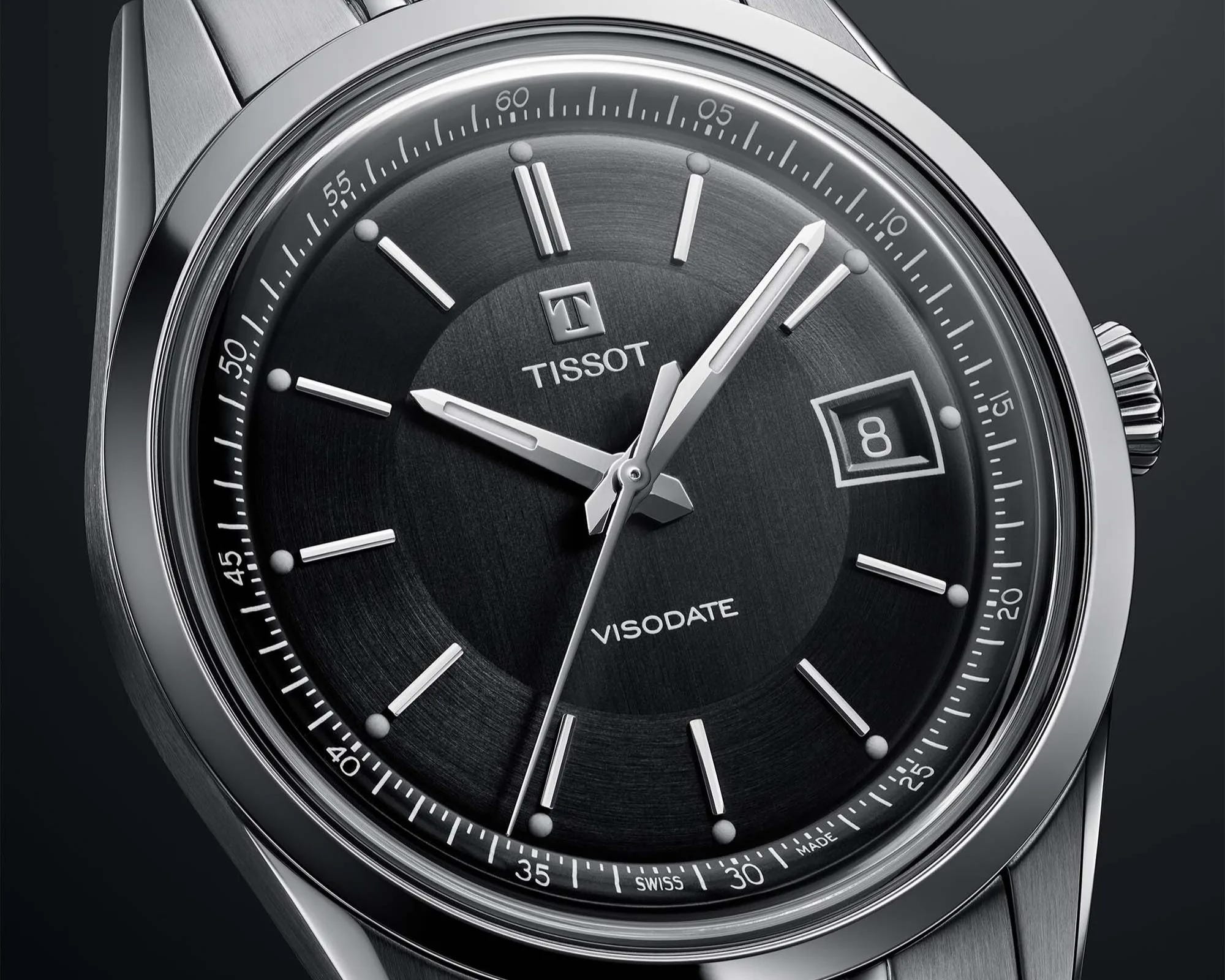
The Tissot Visodate returns and it still gets the basics right
The Tissot Visodate has always been a weird watch. First released in 1954 and brought back in 2010 under the Heritage line, it became one of those watches people pointed to when someone asked for a clean, affordable automatic. Not unlike the Le Locle, the Visodate allowed folks who didn’t want to spend an arm and a leg to get a nice, classic watch. Heck, the styling of the modern version isn’t that far off from the original pieces from the 1960s.
Then the modern Visodate disappeared. By 2023 it was gone, which made its return now feel less like a relaunch and more like a correction.
This new version pulls things back to where they should have been. The case comes in at 39mm across and 10.45mm thick, a size that fits the original spirit better than some of the larger iterations that came later. It sits flat, wears easily, and avoids the bloat that tends to creep into modern reissues.
The finishing is straightforward. Brushed along the midcase, polished on the bezel and edges. Enough contrast to catch light, not enough to turn it into something it is not. The box sapphire crystal does most of the work, adding that slight distortion at the edge that gives the watch a bit of age without faking it. Water resistance is 50 meters, which is fine for daily wear, and the crown is now larger and easier to handle, a small change that actually matters.
The dial is where Tissot got the balance right. Blue, black, and a silver option with gold accents, each one restrained but not flat. The center is vertically brushed, surrounded by a circular track that adds depth without calling attention to itself. Applied baton markers keep things clean, with small lume dots placed just outside. Enough to be useful, not enough to shift the tone.
The dauphine hands follow the same logic. Sharp, proportional, easy to read. The date at three is framed in a way that feels considered. It does not interrupt the dial, it sits within it. A slightly concave chapter ring pulls everything inward, giving the face a sense of structure that many watches at this level lack.
Inside is the Powermatic 80, now standard across much of the Swatch Group. It runs at 3 Hz, offers an 80 hour power reserve, and uses a Nivachron balance spring for improved resistance to magnetic fields. It is not a showpiece movement, but it is reliable, and that has always been the point of the Visodate.
Tissot pairs the blue and black versions with a beads of rice bracelet, which suits the watch better than a flat link would. The silver dial with gold accents comes on brown leather, leaning more traditional. Both make sense.
Pricing lands where you would expect. $950 on bracelet, $850 on leather. No surprises, and no attempt to push it higher. It’s a great entry level watch for folks who just want three hands and a date window.
What stands out is not what Tissot added, but what they avoided. There is no attempt to overstate the heritage, no forced vintage cues beyond what already belonged there. The watch feels settled.
For a long time, the Visodate was the answer to a simple question: What should I buy if I want a clean, well-made mechanical watch that does not try too hard?
That answer is back. You can check out the styles on Tissot’s site.