

Bloop! Bloop! The rise and fall of TiVo

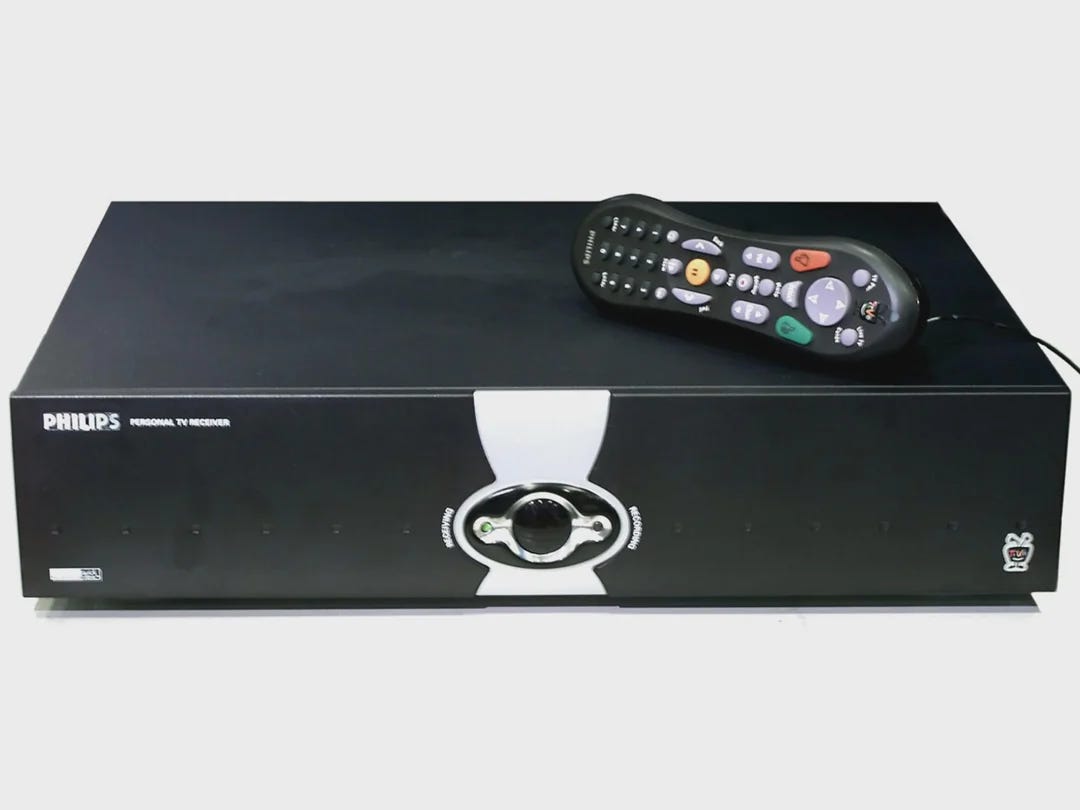
Bloop! Bloop!
You remember the sound. It was a cross between a bubble popping and a robot burping, a noise that meant you were about to watch The Daily Show, even if it had aired the night before. It wasn’t live, but it didn’t matter. You had a TiVo.
Today, that seems almost ordinary. Every streaming service remembers where you stopped watching. Every phone can record video. Every television comes with apps. But in 1999, TiVo felt like science fiction.
Before TiVo, television followed a schedule. If your favourite show aired at 9 p.m., you were in front of the television at 9 p.m. If you missed it, you hoped for a rerun. Some people programmed VCRs, but most people remember that experience as a collection of blinking clocks, confusing menus, and tapes that somehow always ended before the final scene. You knew that time mattered, and if there were commercials, you had to sit through them or go grab a sandwich.
I still remember the terrible days before TiVo. We would watch prestige TV — Grey’s Anatomy or The Sopranos — and have to sit still. Nobody was on their phone. Nobody was half watching, half browsing TikTok. Hell, TikTok didn’t exist. Instead, you were glued to the set at a set time and didn’t get to leave until the show was over. It was torture.
TiVo changed that relationship completely. Television stopped being something broadcasters controlled and became something you controlled.
The box, devoid of buttons, sat quietly beneath your television, recording hours of programming onto a hard drive. You could pause live television, rewind a scene you had just missed, or skip commercials with a few taps of the remote. Those features sound ordinary now because they became the standard. At the time, they felt almost magical. You had a collection of shows you could keep forever. There was that one episode of Friends you liked. Or that documentary that you were going to pop back into. It was right there, waiting on a spinning hard drive.
TiVo also did something even more interesting. It learned what you liked. If you watched enough documentaries or late-night comedy, it would quietly record similar programmes it thought you might enjoy. Long before Spotify playlists and Netflix recommendations, TiVo was already trying to answer a simple question: “What should I watch next?”
The TiVo knew. But how?
The TiVo story
There are only a few examples today of what TiVo meant to the culture at large. Google took over search, and billions of people knew the verb. OpenAI has far fewer users and is barely a blip in the zeitgeist. But to TiVo… to perform the act of TiVoing? That was something special and rarified and global.